Hospitality design: the trends set to define 2026
Published on 15 December 2025 by Sonia Taourghi
TREND. Reinvented Art Deco, sustainable materials, immersive art: after making their mark in 2025, these underlying movements are set to dominate 2026. Between sophisticated nostalgia and responsible innovation, a look at the trends that are reshaping hospitality for the long term.
The year 2025 marked a decisive turning point in the world of hotel design. Gone is the cold, impersonal minimalism that dominated the past decade. The most sought-after properties embraced a warmer, more intimate approach, where refinement goes hand in hand with authenticity. This revolution is only just beginning: the many openings scheduled for 2026 confirm that these trends are far from slowing down. From the Waldorf Astoria New York, revived after eight years of restoration, to the dozens of boutique hotels opening their doors next year, a new definition of luxury is taking hold. It favors emotion over ostentation, sustainability over the ephemeral, and the art of living over mere appearances. Here is an overview of the eight trends that will shape the hospitality industry of tomorrow.
Art Deco triumphs and goes global
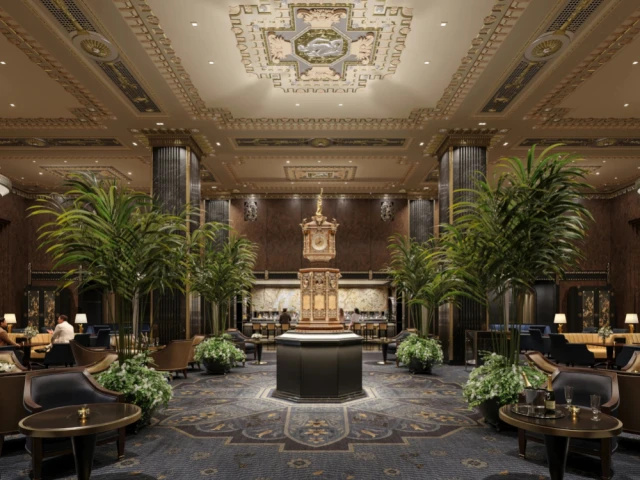
The Art Deco movement celebrated its centenary in 2025, and luxury hospitality paid it a spectacular tribute. The reopening of the Waldorf Astoria New York last July embodied this renaissance. After eight years of meticulous restoration led by the firm SOM and interiors conceived by Pierre-Yves Rochon, the iconic 1931 palace has regained its original splendor. The 375 rooms now blend preserved Art Deco details—geometric patterns, warm metals, elegant lines—with ultra-contemporary comfort. The Grand Ballroom, with its capacity of 1,500 people, has been restored down to the smallest detail, from the ceiling’s bas-relief medallions to the luminous cove lighting.
In Paris, Maison Cassandre and Hôtel Miss Fuller, inspired by Art Nouveau icon Loïe Fuller, perpetuate this glamorous aesthetic. London saw the opening of The Newman in Fitzrovia with its 81 rooms reinterpreting that golden era. This trend is not letting up: 2026 will see the inauguration of the Waldorf Astoria Admiralty Arch in London, transforming the historic monument commissioned by Edward VII into a 100-room palace. This aesthetic answers a desire for grandeur and timeless elegance, a lasting antidote to minimalist design.
Art is here to stay in hotels
In 2025, hotels—especially in the luxury segment—turned into true living museums, and this trend is gaining momentum. Le Grand Mazarin in Paris pushed the concept further with 350 artworks integrated into the flamboyant design by Martin Brudnizki. Every space becomes a visual discovery, where the stay is paired with an immersive cultural experience.In London, the Broadwick Soho also showcases its collection of 350 works, including pieces by Francis Bacon, Bridget Riley, and Andy Warhol. More daring still, art’otel London Hoxton displays two original Banksys and offers immersive digital art installations by D*Face. Ace Hotel Palm Springs hosts artists in residence and organizes NFT art exhibitions, turning the hotel into a living creative platform. Open since last September, Rosewood Chancery in London features an impressive collection of 700 works and a stated ambition to bring artists to the fore thanks to a full-time ‘Art Concierge.’This approach, embraced by guests seeking enriching cultural experiences, is inspiring many projects for 2026. Hotels are no longer simply places to stay: they are becoming cultural destinations in their own right.
“Resimercial” takes over every capital
After years of austere minimalism, “resimercial”—the fusion of residential comfort and commercial elegance—established itself as THE counter-trend of 2025. And it’s only gaining momentum. Travelers want to feel “at home, but better“.The Zetter Bloomsbury will open its doors in March 2026, set across six Georgian townhouses near Russell Square. The 68-room property focuses on carefully sourced antiques, richly layered textiles, and a warm color palette. Designer James Thurstan Waterworth created spaces that feel more like an elegant private apartment than a traditional hotel.In New York, the Warren Street Hotel by Firmdale Group, opened in February 2024, showcases Kit Kemp’s eccentric, colorful signature. Each room tells a story with bespoke wallpapers, vintage furniture, and bold floral arrangements. In Brooklyn, The Penny Williamsburg offers 118 rooms equipped with kitchenettes, inspired by the neighborhood’s classic apartments. In Paris, Hôtel Filigrane & Spa cultivates this intimacy with jewel tones and private townhouse-style atmospheres. This approach will be even more appealing in 2026, with many properties adopting this warm, personalized style.
Natural materials become the standard
In a world where we spend 90% of our time indoors, natural materials have become the new markers of authentic luxury. Reclaimed wood, local stone, rattan, and natural fibers are gradually replacing synthetic materials—a trend that will only accelerate.The MOB Hotel Cannes embodies this philosophy with its 43 rooms refurbished while preserving existing materials. In Paris, Salvia (planned for 2026) takes the concept further by creating a “sage room,” where a therapist guides guests through an experience centered on medicinal plants. The Viceroy at Ombria Algarve, opened in October 2024, celebrates traditional Portuguese architecture with local materials and a sustainable design that blends harmoniously into the landscape.This approach goes beyond aesthetics: it reflects a deep commitment to sustainability. Increasingly strict environmental regulations and rising guest expectations make this trend not a choice, but a necessity for the years ahead.
Wellness becomes a holistic experience
In 2025, wellness decisively moved beyond the spa to become integrated into every aspect of the hotel experience. Circadian lighting, aromatherapy diffused in public spaces, orchestrated sensory experiences: everything contributes to creating a holistic environment—an approach that will continue to become more sophisticated.Hôtel Hana in Paris, opened in early 2024, offers a subtle fusion of Parisian elegance and the Japanese philosophy of well-being. Its 25 rooms are arranged around a plunge pool, creating an oasis of serenity in the heart of the capital. Six Senses London, expected in 2026, promises a revolutionary concept with its wellness social club integrating coworking spaces.In Mexico, SHA opened a seaside wellness clinic where stays are designed as true regeneration programs. In Paris, Hôtel Grand Cœur Latin unveils a Roman-inspired wellness area.2026 will see this trend intensify with the integration of cutting-edge technologies for personalized well-being monitoring.
Architectural heritage reinvented as hotels
Converting historic buildings into luxury hotels enjoyed a golden age in 2025, and 2026 looks set to be even richer. The Waldorf Astoria Admiralty Arch in London, expected in spring 2026, will transform the Grade I monument commissioned by King Edward VII into a 100-room hotel. Anantara Convento di Amalfi has turned a 13th-century Capuchin convent perched on the cliffs of the Amalfi Coast into a luxurious refuge.In Copenhagen, the Park Lane has taken over a former 1920s cinema, while in Dublin, The Hoxton moved in in November 2025 to the former Victorian Central Hotel and its legendary Library Bar. In Spain, the Meliá Collection Ronda (2026) will transform the former Madre de Dios convent into a 27-room boutique hotel. These projects reflect a lasting desire to preserve heritage while breathing new life into it.Guests are looking for places steeped in history—spaces that tell a story and connect the past to the present.
Color regains its prestige
After years dominated by sterile grays and whites, color made a major comeback in 2025. Warm tones—chocolate browns, deep caramels, terracotta, and enveloping taupes—are redefining hotel palettes, and this chromatic trend shows no sign of slowing down.Hôtel Château d’Eau in Paris, opened in May 2024, fully embraces a 1970s aesthetic with its 34 rooms bathed in warm colors. Maison Barrière Vendôme, inaugurated in January 2025, celebrates French craftsmanship with Pierre Frey and Lalique creations in a harmony of caramel and honey tones. In Brussels, The Hoxton rolls out its 198 rooms in a warm retro atmosphere that evokes the golden age of the 1970s.This return of color reflects a deep need for comfort and sensuality. Warm spaces foster well-being and relaxation—essential qualities that hoteliers will continue to cultivate in 2026.
“Quiet luxury” establishes itself as the benchmark
In reaction to ostentatious maximalism, a more discreet form of luxury took hold in 2025 and is expected to dominate 2026. “Quiet luxury” favors subtle refinement, invisible-yet-present details, quality that can be felt without being loud.Park Lane Copenhagen, opened in January 2025, embodies this serene minimalism where every element is considered yet never demonstrative. The Florentin in Frankfurt, opened in December 2025 within the Althoff collection, offers 147 rooms in a spirit of restrained elegance. In London, the Montcalm cultivates a concept of “sensitive luxury” in a restored Georgian hotel, where luxury is found in the perfection of the finishes rather than in an accumulation of decorative elements.This approach appeals to a sophisticated clientele that prefers discretion to display, substance to superfluousness. True luxury no longer shouts: it whispers. And that whisper should resonate even more strongly in 2026.
2026, the year of consolidation
These eight trends are not passing fads: they outline the contours of a luxury hospitality sector that has been profoundly and lastingly renewed. Having emerged and matured in 2025, they are set to dominate 2026 with a wave of openings that will only amplify them. More sensitive, more responsible, more authentic, this new hospitality responds to the deep aspirations of a clientele seeking memorable experiences rather than mere comfort.From the Waldorf Astoria Admiralty Arch in London to the Meliá Collection Ronda in Spain, as well as dozens of biophilic and “resimercial” projects in the pipeline, 2026 will confirm that these trends are far from slowing down. Between preserved heritage and bold innovation, these properties prove that it is possible to combine excellence and awareness, refinement and sustainability. The future of hotel design is not merely being written: it is being built, stone by stone, in these places where every detail matters to create, beyond a stay, a true life experience.
Source: maisonapart.com . Photo credit: The Waldorf Astoria is an ode to the golden age of Art Deco © Waldorf Astoria New York – New York, United States